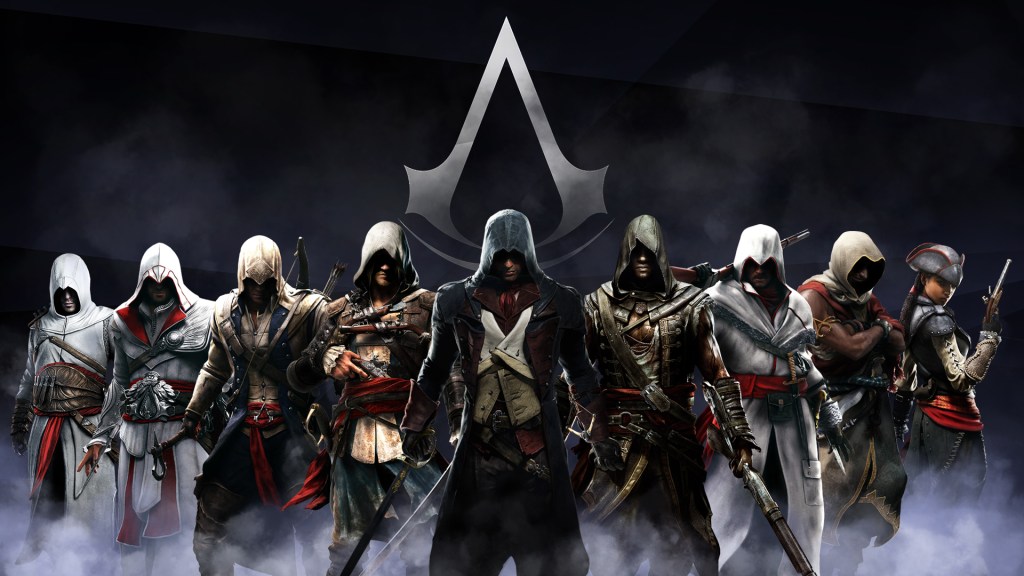
When it released in 2007, Assassin’s Creed instantly cemented itself as a big player in the gaming scene. What wasn’t there to like? You played as an assassin, navigating roof tops and busy streets to assassinate targets using a mixture of stealth and cunning, and delivering the finishing blow with a hidden blade. It was (almost) every teenager’s dream, and created a space in the industry that was yet to be filled. But over the years, the franchise has evolved to a point where it has become almost unrecognisable, ignoring the fundamentals that were established in the first 2 titles of the series. In today’s post, I’m going to work my way through the series, looking at key changes from title-to-title that resulted in this huge shift in the focus of the series.
It’s really important that you, as the reader, understand that I will be taking a neutral view throughout the majority of this piece. Assassin’s Creed, as a franchise, has become controversial in the way in which it has changed. There are some people who have a deep affection for the earlier entries in the series, who would later feel betrayed in the complete upheaval of the franchise. While on the other hand, there are people who love the later entries, enjoying the vastness of the open worlds in which the newer games are set, while feeling the older games are dated. The intention of this article is to understand what it was that caused the changes in the franchise, regardless of my own opinion in the matter.
I’m going to take you back fifteen years now, specifically to November 2007. At this time, the PS3 and Xbox 360 were a year old, and gamers were enjoying an improvement on graphics quality and new experiences they could only have dreamt of during the previous generation of consoles. November was an extremely heavy-hitter for game releases that year. On the Nintendo side, we saw Super Mario Galaxy release to critical acclaim, while on the “Big Two” we saw Modern Warfare release, followed by Uncharted on PS3 and Mass Effect on Xbox 360. In between these major releases was another newcomer, namely Assassin’s Creed.
When it originally came out, Assassin’s Creed scored relatively poorly compared to other major releases at the time, scoring 81 on metacritic. While the setting of the game, and the overall premise was highly praised, the narrow combat system, where variety was limited, was heavily criticised. Assassin’s Creed was filling a space in the industry that was yet to be explored, and this was reflected by its sales. In April 2009, Ubisoft reported that Assassin’s Creed had sold 8 million copies, which completely went above their expectations. They knew they had something special in their hands, but the question was how could they keep the momentum going.
Let’s take a step back for a second and explain what Assassin’s Creed was when it released. The game was split into two main areas: the historical setting where the majority of the game took place, and the present day. The premise was actually extremely interesting. In the modern day you play as Desmond Miles, who has been taken by a company called Abstergo and is forced to complete some experiments in the company’s animus system. He has been specifically chosen as he is a descendant of a long line of assassins, and using the animus, the memories of the assassin can be tapped into via Desmond. It is here that the Sci-Fi elements of the story are set up.
On the other hand, the historical setting takes place in 1191 during the Third Crusade in the Holy Land (modern day Israel), where the player takes control of Altaïr, an assassin working for the order. The story follows his journey as he assassinates members of the Templar order (a rival faction as such), before reaching a thrilling climax. The parkour system within the gameplay loop was revolutionary at the time, and made up for the lack of combat options. The real jewel in the crown was the story, and the way both timelines were linked as the story progressed. This was a formula that would be stuck to for the next four iterations of the franchise.
“The real jewel in the crown was the story, as both timelines were linked as the story progressed.”
Assassin’s Creed II, Brotherhood, and Revelations would follow the story of possibly the most beloved of the assassins in the series, Ezio Auditore, an assassin whose story took place majoritively in 15th Century Renaissance Italy (with Revelations taking place in Constantinople). These games continued the modern day storyline that began in the first title, following Desmond and his fight with Abstergo. These games would cement Assassin’s Creed as a historical franchise, blurring the lines between fact and fiction. The game takes place in a fictional history, with some real people, including Leonardo DaVinci, one of the game’s main side characters in Assassin’s Creed II, having an influence on major events that unfold. While the stories were universally praised, by the time the franchise reached Revelations the gameplay was starting to become a major debate in the community, with users describing some of the mechanics as dated. With calls for the next game in the series to undergo some changes, Ubisoft turned their attention to Assassin’s Creed III.
This was the first indication that the industry was demanding something new and fresh from the franchise. While the first four games established a solid foundation of a beloved franchise, making it a big player in the industry, technology had surpassed what Ubisoft were doing. The next generation of consoles was just a year away, and players were starting to expect more from new releases. On the other hand, corporate greed soon became apparent, with Ubisoft announcing that they were going to release a mainline Assassin’s Creed title every year. What would appear unachievable came about as Ubisoft would split the development of the games between two of their main studios: Ubisoft Quebec, and Ubisoft Montreal.
The next true sequel in the franchise would come about with Assassin’s Creed III, which was to be the final tale in the Desmond Miles saga, and introduced a new time period and protagonist. Players were now taken to the American Revolution, and played as Connor, as well as a first in the series, playing the beginning sections of the game as Haytham Kenway, a Templar. While this game received critical acclaim upon its release, it actually received a very mixed response from fans of the franchise. Praised for introducing new features such as naval combat and deeper combat choices, players did not take as well to Connor as they had done Ezio, and the story was not as well praised as others. The game was larger in size, granting the player more exploration and free-running pieces, and thus began the upwards trajectory the franchise would see in its map size. Oh, and I probably should mention, this game sold twelve million copies in just 4 months. Bear that in mind when we look to the future of the franchise a bit later on.
Assassin’s Creed IV: Black Flag was the next installment in the series, and to this day it remains one of the most popular games in the franchise. Not only do you get to live the assassin fantasy, but you also get to embrace the life of pirates in what was the biggest shake-up the franchise had ever seen. For the first time in the series, the modern day story was changed, where you play as a non-identifiable Abstergo employee (these sequences played in first person perspective), deliberately done to make the player feel as though they were the employee. In the bulk of the game you play as Edward Kenway, the Grandfather of Connor from AC3, a pirate who becomes involved in a conflict involving the Templars, but only because of the riches promised to him once the conflict finishes.

Assassin’s Creed IV: Black Flag remains one of the most popular games in the franchise. Ten years from its release, rumours are circulating of a remake being released in the distant future.
This is where a gradual shift starts to happen in the series, and this game is the first such example, however it does resolve itself by the end. In the first five games in the series, it was very clear that we were playing as an assassin, that is, of course, in the title of the game. However in Black Flag we spend the majority of the game playing as a pirate, who throughout the course of the game learns and understands the ways of both the Assassin Order, and the Templar Order. Eventually, Edward would become an assassin, but it was the first indication that the franchise was beginning to move away from its roots.
Black Flag was another commercial success, having sold over 15 million copies as of 2020, and was praised for the vastness of the world and the naval combat deployed throughout the story. Again, I go back to the question at hand, and ask you to understand the scale of these games. Ubisoft were making games that had millions of sales on an annual basis, there was absolutely no way that they would ever drop the name of Assassin’s Creed from a headline title ever again. This franchise had become Ubisoft’s cash cow, and boy oh boy were they going to milk it.
“This franchise had become Ubisoft’s cash cow, and boy oh boy were they going to milk it.”
2013 saw the release of the PS4 and Xbox One, and the following year saw Ubisoft release two separate Assassin’s Creed titles: AC Rogue for the PS3 and Xbox 360, and AC Unity for the PS4 and Xbox One. I’m honestly not sure how to approach this section of the blog, as trying to understand the mindset behind this is confusing. On one hand, those who haven’t managed to get their hands on a next-gen console still had a new Assassin’s Creed game, but on the other, those who were invested in the series, but also got the new console, had to buy 2 games to keep up!
Rogue introduced us to Shay Patrick Cormac, an assassin recruit who would later turn to the Templar Order, a narrative plot point that would be praised heavily by reviewers at the time. However, many felt that this was a glorified Black Flag DLC, criticising it for the lack of innovation and an empty world. The game scored a disappointing 72 on Metacritic. At this stage, you have to wonder if Ubisoft were favouring quantity over quality.
On the next-gen side, Unity released, and was a broken mess for the majority of players. With the industry seeing bigger and more ambitious games coming into the world, Unity was the next big step in the evolution of Assassin’s Creed. The graphics had been massively enhanced, and the parkour system was reinvented to be slicker and more dynamic in nature. However, the game simply was in no state to be released when it came out, and so the legacy of this game was ruined. One of the big talking points coming into this game was that the map of Paris had been built to an almost 1:1 scale, which was unheard of within the industry.
Unity was set during the French Revolution, a stand-out moment in history, and had an intriguing modern day story, where once again, the idea was that the player was the character in the modern day sections. The player is contacted by the modern day assassins, and is asked to access Arno Dorian’s memories to help the Order in its modern-day fight against Abstergo. The historical side sees the player play as Arno, whose father is killed by Shay Patrick Cormac (the ending of Rogue and beginning of Unity line up) and so he is raised by the Templar Grandmaster. The story of the game sees Arno make his way into the Assassin Order ranks, similar to the way in which Ezio did in AC2.
The next game in the series, and the last of the more linear structure of Assassin’s Creed games was Assassin’s Creed Syndicate. Set in Victorian England, we play as twins Evie and Jacob Frye, members of the Assassin Order who arrive in London to find it mainly under Templar Control. The game sees the twins work with many (and I mean MANY) historical figures such as Charles Dickens, Charles Darwin, Florence Nightingale, and even Queen Victoria herself to take the city back away from the stronghold of the Templar Order. The game received a mixed reception, and as of November 2017 had only sold 5.5 million copies.
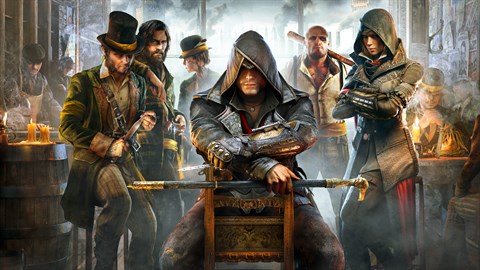
Syndicate would signal the changing of the franchise, as the last more linear title before Ubisoft would embark on the RPG era, beginning with Origins.
I think it’s fair to say that Assassin’s Creed by this stage was dying. Sales figures had declined, and annual releases meant that story quality, and game quality was being cast aside in favour of quicker releases. The value of the franchise was dying, and Ubisoft needed to find a way to get this back on track. So they took a breath, and they paused for a year, waiting two years until they would release the next game. Contextually, the games industry was changing, and quite simply, Ubisoft had not kept up with it. AAA games were now more often than not open world, and players seemed to be wanting more bang for their buck. Open world games gave players more content for what they were paying for, and so it almost became inevitable that Ubisoft would feel the need to adapt to this new trend.
And they did. The release of Assassin’s Creed Origins saw Ubisoft move so far away from the original game that it was almost unrecognisable. This game was huge, and boasted a loot system and levelling system to rival any other open world game at the time. Adding the setting of Ancient Egypt to this game instantly made this an interesting title. Here in the UK, we are taught about Ancient Egypt when we’re in Primary School, and so I must admit when I saw the setting for this game I was quite excited.
This new era also saw a new modern day story, as the player is introduced to Layla Hassan, an Abstergo employee who discovers the corpses of Bayek and Aya, the protagonists of the game’s historical side. Using an animus, she accesses their memories, and we play out what is the origin story of the Assassin Order, a story that was praised throughout. An interesting story beat of the modern day is the introduction of William Miles, father of Desmond, who convinces Layla to work for the assassins. Origins received high praise from critics, and sold much better than Syndicate, selling over 10 million copies.
Delighted with this re-invigoration in the series, Ubisoft held firm on the open world RPGs, feeling that this was what was best for the series. Having just done an origin story for their entire franchise one would think that they couldn’t possibly go further back in time. Right? Well, you’d be wrong. So. Very. Wrong.
This is where I must let you know that all neutrality goes out the window, because this, for me, is where Ubisoft started showing their true colours. The next title in the franchise was Assassin’s Creed Odyssey, set in Ancient Greece, which admittedly, is an interesting historical setting. However, the character you play as IS NOT EVEN AN ASSASSIN, rather, a mercenary. You might say to me “But Joe, isn’t a mercenary basically an assassin?”, to which I might reply “Yeah it kinda is”, but also, these games are about an Assassin Order, fighting a Templar Order. Not a mercenary who is killing members of some weird cult or something. I cannot defend this, and this is where I think it’s plain to see that corporate greed fully took over. I haven’t even mentioned the one dimensional parkour, but just think about what the original Assassin’s Creed was, and what it has become now.
Finally, the last game released in the series is Valhalla, where once again, you play as a viking, not an assassin. A viking, by the way, who at the end of the game REJECTS JOINING THE ASSASSIN ORDER BECAUSE BASICALLY THEY THINK IT’S STUPID. YOU HAVE JUST PLAYED THIS GAME FOR OVER 80 HOURS AND WHEN YOU REACH THE END, THE “ASSASSIN” THAT YOU PLAY AS LAUGHS AT THE IDEA OF BEING AN ASSASSIN. In a game that has Assassin’s Creed in the title, you have the protagonist calling the order stupid. I wish I was making this up but I promise you I’m not.
A couple of final things to mention before I finish. Firstly, the new games came filled with microtransactions, which included buying XP buffs to make it easier to level up, as well as cosmetics to customise your character. If that’s your thing, then fair play to you, but it just stinks of total corporate greed. And with Valhalla having over £60 worth of add-on DLC, it clear to see that Ubisoft are just milking that cash cow for all that it’s worth.
To conclude then (finally, you say), I think that initially, the evolution of Assassin’s Creed came about simply because the industry demanded it. The gameplay from the original was becoming outdated, and Ubisoft had to try new things to stay on top. And largely they’ve been very successful in doing this: Valhalla sold 1.8 million copies a week after launch, and is now the second most profitable Ubisoft game of all time. However, many of the recent changes are very clearly due to corporate greed, and it has got to the point now where Ubisoft have become a company that more hard-core gamers are wary of. The company has lost its way since 2007, with some horrendous allegations thrown at the company’s higher-ups, and some seriously dodgy monetary decisions, not just in Assassin’s Creed but in other Ubisoft franchises.
As for Assassin’s Creed, Ubisoft have no plans to slow the train down with the franchise. Mirage released in October 2023 to decent reviews, and was seen by many hardcore fans of the series as a great homage to the older games in the series. This style of game may only be a one-off however, as codename Red is due for release sometime in 2024, and has been confirmed to be another large-scale open world RPG. For now, all we can do is wait and see, but I for one desperately hope that we see Assassin’s Creed games with fewer microtransactions and a story that goes back to the high standards seen in the Ezio Trilogy.
 Gaming Ramble Weekly
Leave a comment